Biggie Biggs
Biggie Biggs is a Total Annihilation map on Slate, 17,952 × 7,808 pixels, with 10 start positions.
36 X 16 Dance from island to island crushing your opponents.
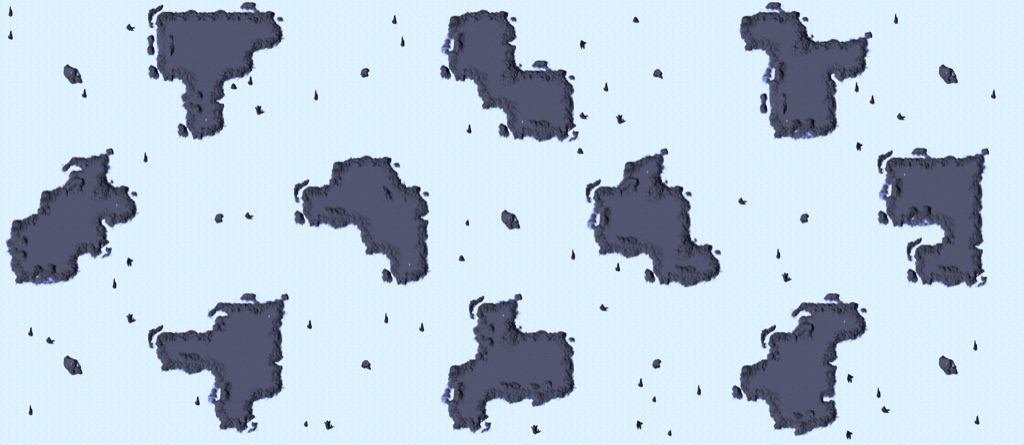
6 geothermal vents
Each start position's territory: the part of the map nearer to it than to any other start in use.
Start Position Fairness
Fairly even with 2 players. The poorest start makes 48.73 metal a second from its deposits, 13% less than the richest, which makes 56.03. The most cramped start has 0.8% less flat land than the roomiest.
| Start | Deposits | Metal a Second | Vents | Area | Flat Land | Lava | Nearest Enemy |
|---|---|---|---|---|---|---|---|
| 1 | 26 | 48.73 | 3 | 48.3% | 5.4% | 38.1% | 11,246 pixels |
| 2 | 29 | 56.03 | 3 | 51.7% | 5.4% | 40.7% | 11,246 pixels |
Uneven with 3 players. The poorest start makes 27.05 metal a second from its deposits, 42% less than the richest, which makes 46.47. The most cramped start has 42% less flat land than the roomiest. The geothermal vents are not shared evenly: from 1 to 3 a start.
| Start | Deposits | Metal a Second | Vents | Area | Flat Land | Lava | Nearest Enemy |
|---|---|---|---|---|---|---|---|
| 1 | 25 | 46.47 | 3 | 46.2% | 5% | 36.8% | 10,475 pixels |
| 2 | 16 | 31.25 | 1 | 27.5% | 2.9% | 21.5% | 4,248 pixels |
| 3 | 14 | 27.05 | 2 | 26.3% | 2.9% | 20.5% | 4,248 pixels |
Uneven with 4 players. The poorest start makes 21.76 metal a second from its deposits, 28% less than the richest, which makes 30.36. The most cramped start has 27% less flat land than the roomiest. The geothermal vents are not shared evenly: from 1 to 2 a start.
| Start | Deposits | Metal a Second | Vents | Area | Flat Land | Lava | Nearest Enemy |
|---|---|---|---|---|---|---|---|
| 1 | 14 | 25.6 | 1 | 22.2% | 2.4% | 17.5% | 4,325 pixels |
| 2 | 12 | 21.76 | 1 | 23.8% | 2.3% | 19.1% | 4,248 pixels |
| 3 | 14 | 27.05 | 2 | 26.1% | 2.9% | 20.4% | 4,248 pixels |
| 4 | 15 | 30.36 | 2 | 27.9% | 3.2% | 21.8% | 4,325 pixels |
Uneven with 5 players. The poorest start makes 17.88 metal a second from its deposits, 28% less than the richest, which makes 24.79. The most cramped start has 32% less flat land than the roomiest. The geothermal vents are not shared evenly: from 1 to 2 a start.
| Start | Deposits | Metal a Second | Vents | Area | Flat Land | Lava | Nearest Enemy |
|---|---|---|---|---|---|---|---|
| 1 | 10 | 19.46 | 1 | 17.5% | 1.8% | 13.8% | 4,325 pixels |
| 2 | 11 | 20.19 | 1 | 21% | 1.9% | 17.1% | 4,248 pixels |
| 3 | 9 | 17.88 | 1 | 18.2% | 1.9% | 14.3% | 4,248 pixels |
| 4 | 12 | 22.45 | 2 | 24% | 2.7% | 19% | 4,325 pixels |
| 5 | 13 | 24.79 | 1 | 19.3% | 2.4% | 14.6% | 4,560 pixels |
Fairly even with 6 players. The poorest start makes 16.31 metal a second from its deposits, 16% less than the richest, which makes 19.46. The most cramped start has 16% less flat land than the roomiest. The geothermal vents are not shared evenly: from 0 to 2 a start.
| Start | Deposits | Metal a Second | Vents | Area | Flat Land | Lava | Nearest Enemy |
|---|---|---|---|---|---|---|---|
| 1 | 10 | 19.46 | 1 | 17.5% | 1.8% | 13.8% | 4,325 pixels |
| 2 | 9 | 17.12 | 1 | 17.6% | 1.6% | 14.2% | 4,248 pixels |
| 3 | 9 | 17.88 | 1 | 18.2% | 1.9% | 14.3% | 4,248 pixels |
| 4 | 9 | 17.12 | 2 | 19% | 1.9% | 15.4% | 4,325 pixels |
| 5 | 10 | 16.88 | 1 | 14.1% | 1.8% | 10.7% | 3,750 pixels |
| 6 | 8 | 16.31 | 0 | 13.7% | 1.7% | 10.3% | 3,750 pixels |
Uneven with 7 players. The poorest start makes 9.97 metal a second from its deposits, 44% less than the richest, which makes 17.88. The most cramped start has 45% less flat land than the roomiest. The geothermal vents are not shared evenly: from 0 to 2 a start.
| Start | Deposits | Metal a Second | Vents | Area | Flat Land | Lava | Nearest Enemy |
|---|---|---|---|---|---|---|---|
| 1 | 7 | 14.05 | 1 | 12.4% | 1.2% | 10% | 3,360 pixels |
| 2 | 9 | 17.12 | 1 | 17.6% | 1.6% | 14.2% | 4,248 pixels |
| 3 | 9 | 17.88 | 1 | 18.2% | 1.9% | 14.3% | 4,248 pixels |
| 4 | 6 | 9.97 | 2 | 13.3% | 1.5% | 10.5% | 3,674 pixels |
| 5 | 10 | 16.88 | 1 | 14.1% | 1.8% | 10.7% | 3,750 pixels |
| 6 | 8 | 16.31 | 0 | 13.7% | 1.7% | 10.3% | 3,750 pixels |
| 7 | 6 | 12.56 | 0 | 10.7% | 1.1% | 8.7% | 3,360 pixels |
Lopsided with 8 players. The poorest start makes 8.4 metal a second from its deposits, 50% less than the richest, which makes 16.88. The most cramped start has 42% less flat land than the roomiest. The geothermal vents are not shared evenly: from 0 to 2 a start.
| Start | Deposits | Metal a Second | Vents | Area | Flat Land | Lava | Nearest Enemy |
|---|---|---|---|---|---|---|---|
| 1 | 7 | 14.05 | 1 | 12.4% | 1.2% | 10% | 3,360 pixels |
| 2 | 7 | 14.05 | 1 | 13.7% | 1.4% | 10.9% | 3,688 pixels |
| 3 | 5 | 8.4 | 1 | 10.6% | 1.1% | 8.5% | 2,458 pixels |
| 4 | 6 | 9.97 | 2 | 13.3% | 1.5% | 10.5% | 3,674 pixels |
| 5 | 10 | 16.88 | 1 | 14.1% | 1.8% | 10.7% | 3,750 pixels |
| 6 | 8 | 16.31 | 0 | 13.7% | 1.7% | 10.3% | 3,750 pixels |
| 7 | 6 | 12.56 | 0 | 10.7% | 1.1% | 8.7% | 3,360 pixels |
| 8 | 6 | 12.56 | 0 | 11.4% | 1.1% | 9.1% | 2,458 pixels |
Uneven with 9 players. The poorest start makes 8.4 metal a second from its deposits, 45% less than the richest, which makes 15.3. The most cramped start has 39% less flat land than the roomiest. The geothermal vents are not shared evenly: from 0 to 2 a start.
| Start | Deposits | Metal a Second | Vents | Area | Flat Land | Lava | Nearest Enemy |
|---|---|---|---|---|---|---|---|
| 1 | 6 | 12.56 | 0 | 10.9% | 1.1% | 8.7% | 3,360 pixels |
| 2 | 7 | 14.05 | 1 | 13.7% | 1.4% | 10.9% | 3,688 pixels |
| 3 | 5 | 8.4 | 1 | 10.6% | 1.1% | 8.5% | 2,458 pixels |
| 4 | 5 | 8.4 | 2 | 11.4% | 1.1% | 9.3% | 3,149 pixels |
| 5 | 9 | 15.3 | 1 | 12% | 1.7% | 8.8% | 3,227 pixels |
| 6 | 6 | 12.56 | 0 | 11.4% | 1.1% | 9.1% | 2,580 pixels |
| 7 | 6 | 12.56 | 0 | 10.7% | 1.1% | 8.7% | 3,360 pixels |
| 8 | 6 | 12.56 | 0 | 11.4% | 1.1% | 9.1% | 2,458 pixels |
| 9 | 5 | 8.4 | 1 | 7.8% | 1.1% | 5.7% | 2,580 pixels |
Uneven with 10 players. The poorest start makes 8.4 metal a second from its deposits, 33% less than the richest, which makes 12.56. The most cramped start has 11% less flat land than the roomiest. The geothermal vents are not shared evenly: from 0 to 2 a start.
| Start | Deposits | Metal a Second | Vents | Area | Flat Land | Lava | Nearest Enemy |
|---|---|---|---|---|---|---|---|
| 1 | 6 | 12.56 | 0 | 10.9% | 1.1% | 8.7% | 3,360 pixels |
| 2 | 6 | 12.56 | 1 | 12.2% | 1.1% | 10% | 3,657 pixels |
| 3 | 5 | 8.4 | 1 | 9.5% | 1% | 7.4% | 2,458 pixels |
| 4 | 5 | 8.4 | 2 | 11.4% | 1.1% | 9.3% | 3,149 pixels |
| 5 | 5 | 8.4 | 1 | 9.5% | 1.1% | 7.4% | 2,414 pixels |
| 6 | 6 | 12.56 | 0 | 9.6% | 1% | 7.4% | 2,580 pixels |
| 7 | 6 | 12.56 | 0 | 10.7% | 1.1% | 8.7% | 3,360 pixels |
| 8 | 6 | 12.56 | 0 | 11.4% | 1.1% | 9.1% | 2,458 pixels |
| 9 | 5 | 8.4 | 1 | 7.8% | 1.1% | 5.7% | 2,580 pixels |
| 10 | 5 | 8.4 | 0 | 7.1% | 1% | 5% | 2,414 pixels |
Each part of the map, and each deposit and vent, counts for the start position nearest to it in a straight line; one exactly as near to two starts counts half to each. Metal is what the Metal Extractor makes on each deposit, or the Underwater Metal Extractor where the deposit lies in deep enough water: 0.001 times the total, over the cells under it, of each cell's metal plus one. The richest deposits are taken first, and no two extractors overlap. A vent counts where the Geothermal Powerplant can be built over it. Flat land is ground the Kbot Lab could be built on: inside the map, out of the water, with no more than 10 height units between its lowest and highest ground, and clear of features that can't be destroyed (trees and other features that can be destroyed count as cleared). Area, flat land and water are shares of the whole map, leaving out any void cells, and the nearest enemy is the distance in map pixels to the nearest other start. The verdict goes by the larger of two gaps between the best and the worst start, in metal and in flat land: under 10% is even, under 25% fairly even, under 50% uneven, and 50% or more lopsided.